

How To Clean Epoxy Resin From Mixing Ocntainer
This post may contain affiliate links. We may earn a modest commission from purchases made through them, at no additional cost to you.
The correct procedure for mixing resin determines success or failure in processing the resin. To help you go the all-time results, nosotros have compiled the 12 best tips on mixing epoxy resin for you in this article.
Tip # 1: The correct Mixing Ratio
Offset of all, when mixing epoxy resin, you should be aware that the resin can take different mixing ratios depending on the manufacturer. In addition to the usual specifications of resin and hardener in a ratio of i : ane or even 2 : 1, the manufacturer's specifications sometimes also include much more complicated variants such every bit 100 : 45.
For this reason, you should read the manufacturer's instructions on the packaging carefully before you start mixing. If you exercise not follow these instructions, the resin may not piece of work every bit desired or may not cure in the end. Our epoxy resin reckoner volition assist yous decide the optimum mixing ratio.

Tip #two : Mixing by Book instead of by Weight
Depending on the manufacturer, information technology is possible that the resin and hardener differ in density. This means that they do not necessarily have the same weight. If the ii components are now measured by weight using a calibration and mixed in a ratio of 1:one, information technology is possible that the mixing ratio is actually wrong because they have different weights. This problem increases the more than volume you mix.
Tip: Use a measuring cup to measure out the resin and hardener by volume when mixing the components. In this case the density of the corresponding cloth is irrelevant.
The calibration of the measuring cup used should have the smallest usable increments possible to enable accurate measurement. First, put the resin into the measuring loving cup and wait a short moment. This allows the surface of the cloth to level out. And then you can add the exact same amount of hardener.

Tip #3 : Observe Ambient Temperature
Casting resin is a very heat-sensitive cloth. Therefore you should likewise proceed an heart on the ambient temperature when mixing the resin.
- At ambient temperatures below 20° C., the resin cures much slower. In add-on, a waxy layer, the and then-called amine reddening, can form on the surface. This must first be removed before the epoxy resin can exist further processed. And this removal can be extremely laborious. If the temperature drops significantly below 20° C, it is also possible that the resin begins to crystallize.
- At ambience temperatures to a higher place 20 ° C., the reaction fourth dimension of the resin increases significantly. And this applies non simply to the time of curing, but also to the fourth dimension in which the material is to be further processed. At very high temperatures it is, therefore, advisable to opt for a production with a longer processing fourth dimension.
If you use epoxy resin outdoors, you should keep in mind that the curing fourth dimension can too exist considerably longer if the temperature drops during the night. In improver, the dew caused by the temperature differences can negatively influence the quality of the surface of the textile.
Tip #four : The Role of Humidity in Processing
But as sensitive equally the resin is to temperatures, the hardener also reacts to contact with air. Therefore, if the humidity in the air is above 65% you should exit the bottle containing the hardener airtight. If yous do non use the textile immediately, the quality will suffer.
This effect too occurs when the bottle is opened and closed again and once again, equally oxygen enters the bottle each time and reacts with the hardener. For the aforementioned reason, the ii components, resin and hardener, should only be handled with absolutely clean tools. Only in this fashion can a reaction within the container be prevented.
Tip: As undesirable side furnishings can occur at a humidity above lxx %, epoxy resin should not be used in this case.
If the application is to be carried out on a substrate with a moisture content of more than vi % (e.g. physical flooring), this substrate should be primed in advance.
To ensure that epoxy resin can exist candy optimally, it should first be stored for approx. 12 hours at an ambient temperature of 20 to a maximum of 25° C. If this long storage menstruum is not possible, the textile tin too exist brought to the correct temperature by means of a water bath. This footstep is extremely important for a satisfactory result, every bit unsightly milky streaks or bubbles can class when casting resin that is as well cold is processed. These are very hard to remove later.
The flow properties are significantly improved by heating the material. As mentioned above, however, higher temperatures also accept an influence on the processing fourth dimension. Basically, you lot should keep in mind that the processing and curing time is halved for each 10° C increment in the temperature of the mixture.
Tip: Non only the temperature of the synthetic resin, simply likewise that of the surface on which the mixture is to be poured must be taken into account. If this is significantly lower than the temperature of the resin, which is tempered to the signal, the curing can be negatively influenced. Temperature and humidity should exist kept constant if possible to reach optimum results.
Tip #5 : Careful Mixing the Components
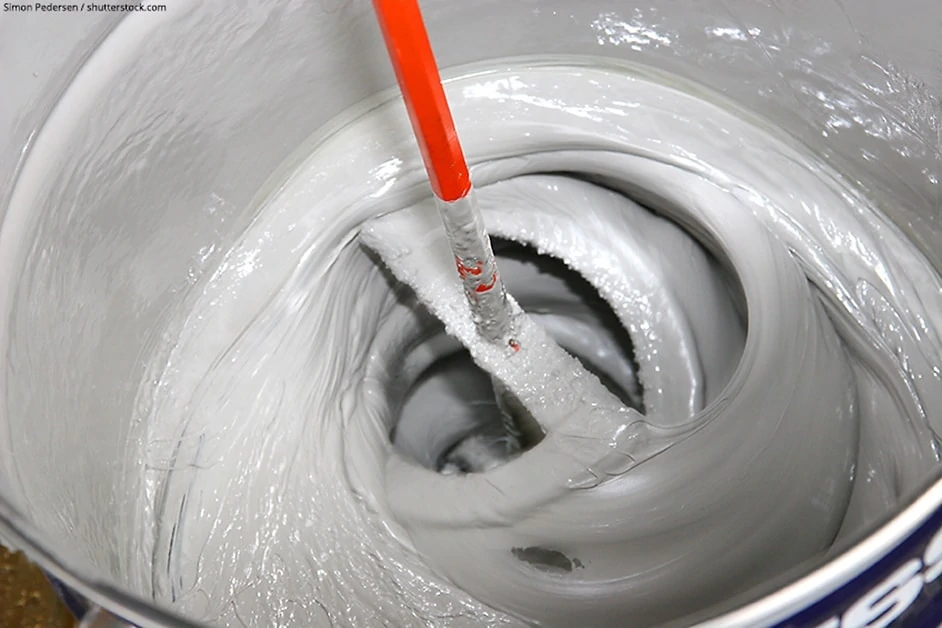
The thorough mixing of the resin and hardener is essential to obtain an attractive, useful effect later on. If you practise not work carefully enough, there is a take chances that incompletely cured, sticky spots may appear in the resin or that the hardness levels inside a workpiece may vary.
When mixing the components, note that often a lot of resin sticks to the border of the mixing container. Since this can impact the mixing ratio, you should not mix very small amounts of resin and hardener in order to have enough material available.
Tip #6 : The right Tool for Mixing the Components
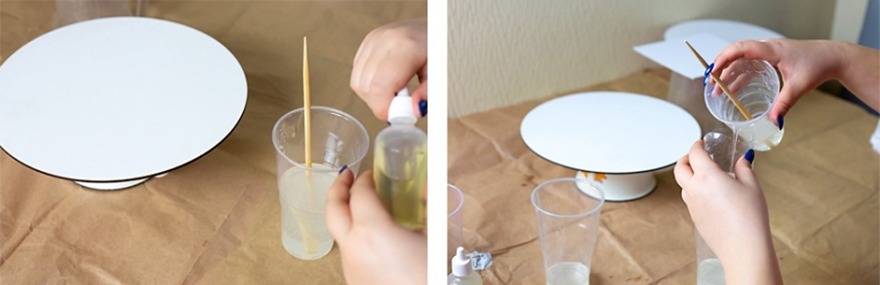
The optimal tool for mixing resin and hardener must have directly sides. This will enable yous to thoroughly mix even the textile that sticks to the bottom and sides of the mixing container. For small quantities of epoxy resin, a flat spatula has proved to be a practiced choice.
This works similar to a stirring rod. For very small quantities you can use a cheap wooden spatula. Special epoxy resin mixing sticks take the advantage that they can be used several times. They are also designed to prevent as well much air from being stirred in. However, these mixing sticks are only advisable for mixing medium quantities of resin.
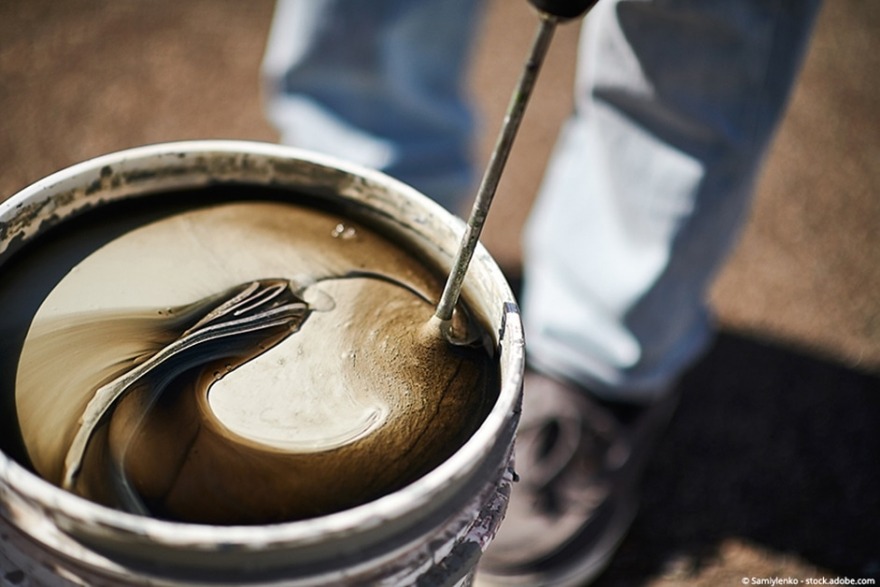
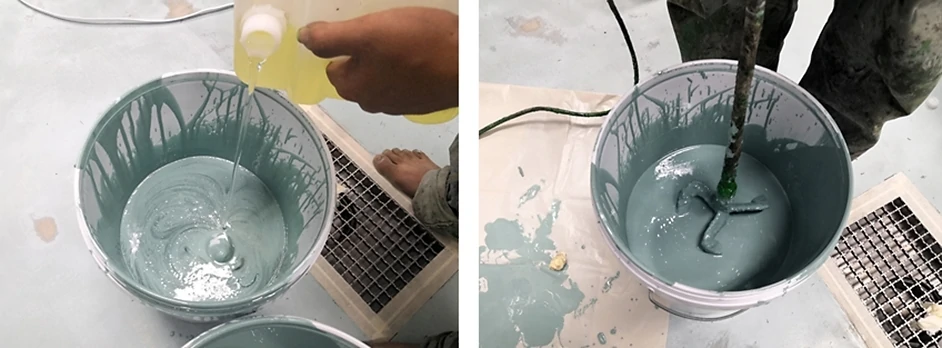
Tip: If you want to mix a large corporeality of epoxy resin, yous should use a bucket with a spout. In this saucepan, the two components can exist easily mixed with a drill with a mixer attached.
Tip #7 : But use high-quality Epoxy Resins
When purchasing epoxy resin, it is always worth investing in a high-quality production, fifty-fifty if y'all are very tempted to fall back on a cheap production. In hindsight, you would regret this purchase, equally cheap products are often discolored yellowish or do not cure before processing. So when buying epoxy resin, the post-obit principle applies: If you buy cheap, you buy twice.
Tip #8 : Use but compatible Resins
Resin and hardener from the aforementioned manufacturer are usually optimally matched to each other. When mixing dissimilar products – both from ane and from dissimilar manufacturers – unexpected chemical reactions such equally extreme rut development can occur. Therefore, when working with constructed resin, you should only employ the products from one manufacturer or brand that are intended for each other.
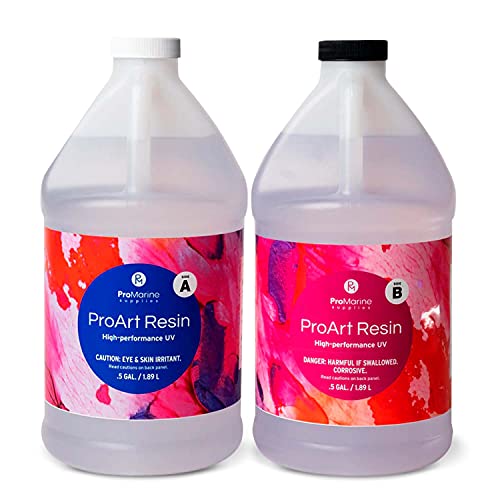
- Specifically designed for fine art projects, fantabulous colour stability
- Very easy to use with one : one mixing ratio, 100% solids, hard-shell stop
- High gloss and crystal clear, your all-seal solution, splendid air release
View on Amazon
Tip #nine : Employ only compatible Colorants
Non all colorants are compatible with epoxy or other resins. When coloring epoxy resin, it is therefore extremely of import to use only suitable color pastes, coloring agents, and pigments. You lot can discover detailed information nearly this in our extra article Epoxy resin colour.
Tip #10 : Notice the recommended Mixing Ratio
If you change the ratio of resin to hardener arbitrarily, you lot cannot expect an optimal result. If you add more hardener to the mixture than the manufacturer has recommended, the material is often less difficult and robust afterwards curing. If you add as well much resin, the surface may become viscid or the material may not cure at all.
Tip #11 : Never add together Water to the Epoxy Resin
As long every bit the resin is still liquid information technology should non come into contact with wet. This could have a negative issue on the quality of the finished product, even in pocket-size quantities. Therefore, before mixing, it must be ensured that both the mixing container and the stirrers used are absolutely clean and dry.

Tip # 12 : Use sufficiently large Containers for Mixing
Chemical reactions generate heat when mixing epoxy resin. This is due to a so-called exothermic reaction. The extent of this reaction depends on the resin, the quantity mixed, and non least on the height of the mixing container. Therefore, here are a few things to consider.
- There is a limit for the mixed amount of resin and hardener. This should not be exceeded. If in doubtfulness, mix a smaller amount of resin twice instead of once, or ask the manufacturer how much resin you tin can mix at once without problems.
- Oestrus generation during mixing is significantly reduced if you select a sufficiently large mixing container for this process. This should be wider rather than college.
- Low reactive casting resins generate less heat during mixing. If y'all want to mix large quantities of resin, you lot should opt for these for your project.
Our Determination on mixing Epoxy Resin
Mixing epoxy resin is much more than than just mixing two components. Some factors such as the ambient temperature, humidity or the choice of products take to be considered. As epoxy resin is relatively expensive, the material should non be wasted unnecessarily by careless handling during processing. And terminal but non least, post-obit our listed points will bring you lot a lot closer to a perfect result.

Source: https://acrylgiessen.com/en/mixing-epoxy-resin/
Posted by: johnsonutred1960.blogspot.com
0 Response to "How To Clean Epoxy Resin From Mixing Ocntainer"
Post a Comment